

Chemistries like diphenylisodecyl phosphite didn’t arrive by accident; a lot of curiosity and demand for improved stabilizers in polymers opened the door. In the late 20th century, plastic products took over packaging, automotive, and electrical fields. Standard plasticizers and antioxidants started showing their shortcomings — discoloration, brittleness, and failures from weathering and heat. Chemists set out to build better organic phosphites, and research labs in Europe and the US rapidly explored variations on the phenyl and alkyl phosphite theme. Diphenylisodecyl phosphite stood out, offering a highly branched isodecyl group attached to a phosphite backbone with two phenyl rings. This molecular design, as it turns out, brought unexpected benefits in weatherability and resistance to hydrolysis, changing how plastics kept their strength and color as the years passed.
Today’s diphenylisodecyl phosphite resembles a clear, viscous liquid. It mixes well in plasticizers and resins, and it’s a staple in additive packages for PVC, polyolefins, and polyurethane. Its most distinct trait lies in handling heat-sensitive plastics, shielding against both oxygen and thermal attack. Producers market it under trade names like Doverphos 10 and Disodecyl-phenylphosphite. These compounds often reach the buyer in high-purity grades, sealed under nitrogen with full documentation, since quality lapses can knock out entire production runs. As a stabilizer, it’s valued for keeping pH levels steady during processing, which keeps hard-earned investments from melting away due to acid build-up.
Diphenylisodecyl phosphite’s physical profile stands out: it’s a colorless to pale yellow oily liquid, boiling well above 200°C but hardly evaporating at typical processing temps. Its viscosity averages between 350 to 400 mPa·s at 25°C, which makes it manageable in pumps and mixers but still thick enough to cling to resin pellets. Its specific gravity sits around 1.0—right in the sweet spot for plastic compounding, limiting phase separation or settling. Chemically, the compound survives long-term exposure to heat. The phosphite center reacts slowly with water, which means storage life stretches for months in a sealed drum. It dissolves quickly in many organic solvents—toluene, xylene, and esters—streamlining blending and cleaning during start-ups and shut-downs.
Most technical datasheets for diphenylisodecyl phosphite highlight purity above 98%, acid content under 0.1%, and color at 50 APHA or lower. Labels must note the UN number for organophosphorus compounds, keep hazard statements visible for flammability and aquatic toxicity, and present recommended storage temperatures. Operators get guidance not just on shelf life but also reactivity with acids and oxidizers. Many suppliers provide a detailed certificate of analysis for each batch, giving processors confidence for food-contact or electrical-grade materials. Barcode tracing has gained ground in the past decade, allowing downstream users to track source and compliance dates as regulations tighten worldwide.
Manufacturers don’t like to reveal step-by-step secrets, but industry insiders point to a multi-stage esterification. Phosphorus trichloride, phenol, and isodecyl alcohol take center stage in a reactor, usually under an inert atmosphere. The mixture heats gently, phenol and isodecyl alcohol react, and HCl vents off, helping drive completion. Reaction rates hinge on temperature and mixing speeds; even slight changes swing yields or purity. Purification comes next, using distillation for volatile impurities and vacuum stripping for stubborn by-products. Filtering through activated alumina smooths out color and odor. Most plants run these steps at moderate scale, since loss of control risks waste or dangerous exotherms.
The phosphite moiety opens up plenty of chemistry. In real-world plastics compounding, it acts as a reducing agent, snatching up peroxides formed during melt processing. This reaction helps slow down yellowing and cross-linking, extending the usable life of plastics. Chemists also tweak the core structure—sometimes swapping phenyl groups for longer alkyl chains, or mixing in higher-branched alcohols to soften handling and boost compatibility with polar fillers. For those pushing boundaries, grafting with epoxy or maleic groups lets the phosphite bond straight into the polymer backbone. Each modification offers a tradeoff, so applications in food wrap or medical-grade plastics often need lengthy validation.
The chemical registry calls it diphenylisodecyl phosphite, but catalogs list synonyms like phosphorous acid, diphenyl isodecyl ester, or simply DPDP. Major brands adopt names such as Doverphos 10, Irgastab DPDP, or Adeka Stab DPDP, allowing buyers in different regions to source consistent product. CAS numbers help in cross-checking, but one should ask for the full chemical structure or a sample, especially in regions where counterfeits surface. Some suppliers use historical trade names on technical sheets, so keeping records of both the generic and brand names prevents mix-ups during audits or product recalls.
Handling diphenylisodecyl phosphite calls for practical safety steps. Splash goggles, gloves rated for organic chemicals, and local exhaust at mixing stations protect workers from accidental contact or vapor. Spills on skin or open cuts can lead to irritation — so training and easy access to eye wash and drench showers play a big role in plant layouts. Wastewater from blending lines sometimes contains trace phosphites, and plants must test effluent streams to avoid exceeding environmental limits on organophosphorus compounds. Most operations run under ISO 9001 and 14001 standards, which require documented procedures and frequent hazard reviews. Transport rules, such as DOT and ADR, treat it as moderately hazardous cargo — not explosive, but still needing double-sealing and secure containers during shipping.
Diphenylisodecyl phosphite firmly roots itself in polymer stabilization, especially where heat and light push conventional antioxidants past their limits. PVC window profiles and automotive dashboard skins run longer and keep color, even under exposure to sunlight and ozone, thanks in large part to this compound. Polyolefin pipes and films benefit from the blend of melt stabilizer and process aid, allowing them to survive months in outdoor storage or harsh climates. Electrical cable jacketing uses diphenylisodecyl phosphite for both physical flexibility and electrical insulation reliability. Rubber and adhesives makers look to it for boosting shelf life and reducing acid liberation during curing. Food-contact applications only appear in some localities where migration limits get met, but tough purity checks and migration studies are always in the background.
Over the past decade, R&D has ramped up on high-performance phosphite stabilizers. Academics and industrial chemists are looking for versions with lower volatility and higher hydrolytic stability, reacting to new demands from biopolymers, eco-friendly films, and complex automotive parts. Modified phosphites often blend with hindered phenol antioxidants, pushing lifespan and color retention past benchmarks set just a few years ago. Research groups use infrared and NMR spectroscopy to track breakdown products, which helps engineers adopt safer process conditions and greener formulations. Collaborative projects between resin producers and additive suppliers have broadened the window for sustained performance, especially for specialty blends in electrical and construction sectors.
Toxicity studies on diphenylisodecyl phosphite provide mixed signals—acute oral and dermal exposures show low toxicity, but chronic or sub-acute inhalation prompts caution. Animal tests suggest mild skin and eye irritation at high doses, plus potential aquatic toxicity when discharged into surface waters. The chemical stays out of many food or pharma applications unless accompanied by full migration data and ongoing surveillance. More recent studies zero in on breakdown products, some of which carry higher risks than the parent phosphite. Occupational health teams regularly sample air and surfaces in plants handling this additive, and safety datasheets get regular updates as researchers find new endpoints. Big users in Europe and Asia push for epidemiological data, helping drive down workplace exposures and inform personal protective equipment choices.
Future prospects for diphenylisodecyl phosphite look tied to the outcome of regulatory tug-of-war and breakthroughs in recycling and bioplastics. Governments worldwide are pressing for stabilizers that avoid persistent, bioaccumulative breakdowns. Formulators continue searching for modifications that keep stabilization power but allow reclaimed plastics to re-enter the economy. There’s mounting pressure on manufacturers to develop green synthesis routes, cutting reliance on hazardous phosphorus trichloride and reducing by-product waste. If research continues steady progress, one can expect new versions with even less migration risk and improved effectiveness, sealing its position in high-value technical compounds. This could mean a surge of low-toxicity, durable plastics from cleanroom electronics to next-generation automotive modules. The challenge comes from meeting tough new standards without pricing the additive out of the market, but the race is already underway in labs worldwide.
Chemistry fills daily life, often quietly powering things most folks don’t notice. One such unsung helper is diphenylisodecyl phosphite. This isn’t something people recognize in their grocery receipts or health supplements. Still, its impact echoes through homes, cars, and electronics. As a person who’s spent years peeking under the hood of consumer goods, I often run into these low-profile, high-impact chemicals. They keep materials reliable, goods long-lasting, and even give manufacturers some breathing room from compliance headaches.
You probably don’t think much about what keeps your vinyl siding or car dashboard from falling apart under the sun, but diphenylisodecyl phosphite plays a role there. Its main job is to slow down the way plastics degrade when exposed to heat and oxygen. That happens through oxidation—a regular nemesis of almost every polymer product—weakening structure and ruining appearance.
Diphenylisodecyl phosphite steps in to grab aggressive chemicals before they can do damage. Plastics producers drop it into mixtures with PVC, polyethylene, polypropylene, and other tough, familiar materials. Without antioxidants like this, manufacturers risk quicker failures, higher costs, and bigger waste problems, all painfully visible in warranty claims or landfill statistics.
Factories that rely on high-temperature manufacturing lean heavily on antioxidants. In my time watching a plastics plant in action, the difference proper chemical protection makes isn't subtle. Machines grind through raw materials, extruding pipes, films, and parts nonstop. A dose of diphenylisodecyl phosphite helps keep the process smooth, fewer shutdowns, and less waste.
The chemical fits the bill especially in wire and cable insulation, window frames, tough-to-burn construction foams, and clear films on packaging. Anything plastic staying outside day after day, or running hot, runs better and longer with the right antioxidant package. Testing has shown that plastics protected with phosphite additives can double or triple their lifespan in certain use cases. This means fewer repairs, less frequent replacement, and more value for both companies and customers.
Any substance making its way into so many products deserves scrutiny. European regulators keep a close watch on phosphites, especially around food contact and recycling systems. U.S. authorities watch levels in packaging and toys. Reputable producers publish research on breakdown products and safety, since a chemical that preserves plastic can sometimes stir concern if mishandled.
I’ve talked with researchers who point out that today’s chemistry toolbox looks a lot better than the one from thirty years ago. There’s smarter engineering now, with less risk to workers, consumers, and the planet. Alternatives exist, but replacing something like diphenylisodecyl phosphite on a wide scale is a slow, deliberate process. Buyers want performance and peace of mind—sometimes a tough mix. Strong record-keeping, ongoing studies, and transparency keep trust in the system.
Industry keeps searching for greener or more sustainable options as pressure mounts from customers and law. Cost, reliability, and safety will decide what comes next. My own experience points to the value in balancing chemistry’s power with sensible oversight and measured innovation. No easy solution covers every need, but honest research, open data, and global cooperation help shape choices for the next generation of materials.
Diphenylisodecyl phosphite gets used in many plastic products as a stabilizer and antioxidant. Its main job is to keep things from getting brittle or discolored over time. While it seems like a background player in the plastics world, understanding how to handle it carries big weight because chemical safety goes beyond test tubes and production lines—it finds its way straight into homes, schools, and workplaces.
This chemical doesn’t jump out as the most dangerous on the market, but certain facts deserve attention. Safety data sheets list skin and eye irritation among possible hazards. If someone breathes in its fumes during manufacturing or heating, there’s a chance of respiratory irritation. In one case, I watched a new lab tech accidentally splash a diluted phosphite solution on her skin and react instantly with burning and redness. She scrubbed for ten minutes and learned fast the risk isn’t just theoretical. Gloves, goggles, and long sleeves come into play not as a suggestion but as a must.
Reports show Diphenylisodecyl phosphite is not likely to cause cancer based on the current research. Still, it's labeled as harmful if swallowed and irritating if it touches the skin or eyes. Animal studies point to low acute toxicity, though researchers haven’t spent decades tracking long-term human outcomes. Even so, anyone who works with the raw material knows to treat it with respect because small, repeated exposures can add up—especially if safety slips during busy shifts.
Factories and research labs build their routines around containment. Local exhaust ventilation matters, since inhaling the fumes isn’t just uncomfortable—it puts lungs at risk. Teams I’ve worked with keep showers and eyewash stations within ten steps of the line. Job training drills the message home: wash after handling, do not eat or drink near the workstation, and if splashes happen, clean up right away.
Even disposal counts. This isn’t a chemical you dump in the sink or trash bin. Companies sort waste per local and federal guidelines, making sure any leftover or spill gets neutralized before hitting the environment. In some states, Diphenylisodecyl phosphite falls under “regulated waste”—a sharp reminder that handling methods reach all the way from the factory floor to the landfill.
Many outside the field only see the finished plastic, not the process behind it. Community worries often kick up around emissions and accidental leaks. Local governments sometimes push for tougher reviews and monitoring, which you can’t fault given past stories of chemical spills making headlines. In my experience, transparency about manufacturing practices and regular updates to safety plans ease some of those worries, especially in towns with a long history of industrial activity.
No chemical comes risk-free, even one like Diphenylisodecyl phosphite that rarely sparks trouble outside of workplaces. Proper training, updated safety gear, regular audits, and a culture that takes every spill or accident seriously make the real difference. I’ve seen companies cut incident rates simply by investing in better gloves and clearer instructions. Creating clear reporting channels for near-misses also builds trust across teams and with the larger public. Everyone benefits when information flows freely, and no one feels rushed to take shortcuts with safety.
Diphenylisodecyl phosphite shows up a lot in plastic manufacturing, especially for stabilizing PVC. If you spend any time with chemical substances, you know those long names point to compounds that demand respect, not shortcuts. Mishandling runs the risk of personal injury and workplace harm, beyond just product loss. I’ve witnessed places where casual attitudes around storage led to unexpected headaches — everything from product contamination to avoidable fires. Trust me, the guidelines aren’t there to pile on paperwork.
Heat turns diphenylisodecyl phosphite into a hazard. Even a few hot summer days in an unventilated shed can get you into trouble. The substance releases irritating fumes, and exposure to high temperatures can ramp up degradation and risk. Store it in a spot that stays below 25°C. Basement chemical rooms make sense, but only if humidity stays low and airflow is steady. Storing drums out of direct sunlight goes a long way. I’ve seen folks try to save space by stacking, but one loose lid or unsteady barrel can turn into a leak and a panic.
Diphenylisodecyl phosphite reacts with air and moisture, breaking down to less useful or sometimes even more harmful products. Once, I watched a lab lose a whole batch after someone forgot to reseal after decanting. Every opening invites humidity and contaminants. Metal drums with proper lining, or HDPE containers with tight screw caps, give strong protection. Folks using open buckets or loosely plugged vessels almost always regret it.
Fumes from this compound carry a bite, irritating eyes and lungs. Trying to handle or decant in a musty warehouse is unsafe. Areas for storage and transfer must have constant airflow, ideally with exhaust systems. I remember a time – a loading dock crew tried decanting near the rear entrance just because it “seemed open enough.” Several complaints and a case of eye irritation later, everyone agreed the inconvenience of a vented room beats losing hours of work to headaches and trips outside for air.
Separate storage from strong acids, alkalis, and especially oxidizing agents. Mixing these in a cramped stock room — not on purpose, sometimes just through a leaky drum — leads to unintended chemical reactions, which can mean fires, explosions, or noxious clouds. Double-check your chemical inventory so storage racks don’t become a patchwork of risky neighbors. A simple shelf divider or clearly labeled zone stops confusion before it starts.
No one ever thinks they’ll spill, until a drum valve sticks or a tired worker loses grip. Spill kits, absorbent material rated for organic chemicals, and eyewash stations offer quick response. Keep a dry-chemical fire extinguisher within reach — water and phosphite don’t mix well under fire conditions. Training everyone who works with or near this substance creates habits that kick in during tense moments. One company I toured learned this fast after a spill, and never let untrained hands near their storage area again.
It’s easy to see safe storage as extra hassle, but the risks cut deeper than a day’s lost production. Routine checks, real enforcement of safety rules, and a workplace culture that listens when someone spots something off help prevent trouble before it starts. Regular training and honest discussion keep people sharp, so mistakes stay rare and small.
Diphenylisodecyl phosphite is not the sort of chemical that comes up at the dinner table, but it plays a quiet role in many industrial settings. Its structure features a core phosphorus atom linked to three groups: two phenyl rings and one isodecyl chain. On paper, that looks like P(OC6H5)2(OC10H21), which means two of the attached oxygens pull in benzene rings, while the third grabs a long, branched hydrocarbon. This sets up a molecule that offers both stiffness from the rings and flexibility from the chain.
In practical terms, those phenyl rings and the isodecyl branch are not just pretty shapes. The phenyls give the molecule a bulky profile, helping it throttle down reactions with oxygen and keep plastics stable when heat starts climbing. I’ve seen manufacturers rely on this kind of phosphite as a stabilizer in PVC and polyolefins—two plastic families that push modern packaging, electronics, and more. The isodecyl arm brings oiliness, which lets the compound dissolve more easily into base materials without leaving behind residues or clumping up.
Looking at phosphite esters in general, the balance of reactive and stable groups makes them tricky. They shield plastics from breaking down, but phosphite dust and fumes can create trouble for workers. If storage runs too warm or humidity sneaks in, you can end up with degraded materials. Reliable supply chains use sealed containers, constant temperature checks, and strong ventilation. Gloves, goggles, and local exhaust fans cut health risks.
Heat and time torch many plastic additives, which sends companies searching for something more robust. Diphenylisodecyl phosphite steps in because of that three-pronged structure—it stands up better to processing temperatures, which sometimes hit 200°C or more, especially during extrusion or molding. That’s not just about financial savings; it keeps shoppers and workers safer, since breakdown products from poorly-stabilized plastics can bring their own set of health concerns.
Experience in chemical plants shows there’s always a push for cleaner, more sustainable chemistry. Researchers want to swap out phenyl groups for less toxic alternatives and hunt for renewable sources for the isodecyl branch. In some facilities, you’ll spot closed-loop systems that recycle off-gas and old plastic, whittling down waste and solvent use. Pushing for greener syntheses is more than a marketing move—it genuinely cuts risks along the manufacturing chain.
A deep dive into diphenylisodecyl phosphite’s structure reveals some of chemistry’s hidden levers—the way certain shapes and side chains help industry run smoother and safer. People making choices about materials need clear facts. For the long haul, open research, better worker training, and pushing regulatory standards higher can make a difference, both inside the factory and outside, wherever these plastics land.
Diphenylisodecyl phosphite isn’t a household name. If you’ve come across it, odds are you’re working in the plastics or chemical manufacturing sector. It acts as a stabilizer and antioxidant, helping products last longer and endure heat. By protecting plastics during processing, this compound plays a quiet but real role in all sorts of things folks use every day—think wires, appliance housings, or even auto parts.
Before opening your wallet, it makes sense to check which suppliers sell this stuff legally in your region. Chemical distribution isn’t as freewheeling as buying cleaning supplies online. Most countries watch chemical sales closely. Safety rules and environmental laws pop up in every chain of the process. Companies such as Sigma-Aldrich, Tokyo Chemical Industry, and PQ Group supply industrial-grade chemicals, but they won’t take just anybody as a customer. They check credentials to keep their licenses and accreditations safe.
Suppliers ignore walk-in inquiries from people who can’t prove a legitimate business reason for buying. That’s how they stay above board with regulators and safety watchdogs. Firms ask for more than a credit card—think tax numbers, business IDs, intended use letters, and maybe even site inspections. There’s a reason for all the hoops. Phosphite compounds, when misused, bring environmental or health risks. Beijing put its foot down on sales after worries about improper handling, and several US states followed suit. I’ve seen research labs one day cut off from certain chemicals with no warning when the paperwork doesn’t add up.
Industrial buyers usually turn to authorized chemical distributors. If you’re in the US, Fisher Scientific and VWR appear on most buying lists—assuming you’ve got the right paperwork. In Europe, Merck handles similar sales. Asian markets lean toward TCI and large state-backed suppliers. At every step, companies require a formal agreement before shipping a drum out. Any website promising to deliver industrial chemicals with little more than a home address should raise alarms. Too many scams have popped up around poorly regulated platforms, and law enforcement keeps an eye on things they think could harm public health.
If you’re buying diphenylisodecyl phosphite for your lab or factory, gather all required business licenses and customer verification letters first. Sometimes it takes weeks to get approved. Some buyers hire third-party consultants to help with documentation. In places like California or Germany, environmental rules could require additional site assessments or safety plans. Large buyers keep a compliance officer on speed dial so they don’t run afoul of changing rules.
Sourcing high-risk or specialized chemicals might feel like jumping through hoops. Still, it’s safer for everyone. I’ve seen real problems in labs when someone buys an unverified chemical and runs into contamination, equipment damage, or regulatory fines. It would help to see more centralized supplier databases to help legitimate businesses connect with reliable sellers. In the long run, more transparency and clear rules protect jobs, health, and the environment.
Attempting to sidestep standard distributors or proper channels introduces risks: fines, shutdowns, or even criminal liability. Unlike buying consumer goods, chemical sourcing involves constant vigilance and legal checks. Those rules exist for good reason—too many times, incidents linked to short cuts have led to long-term damage or public scandals. The smart path stays on the right side of the law and industry standards.
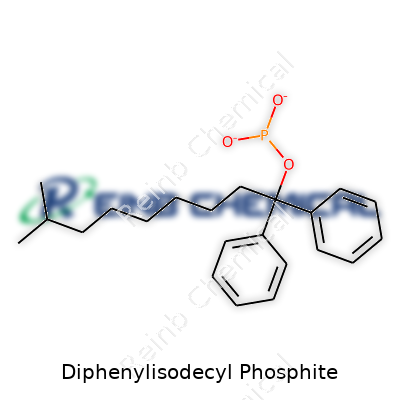
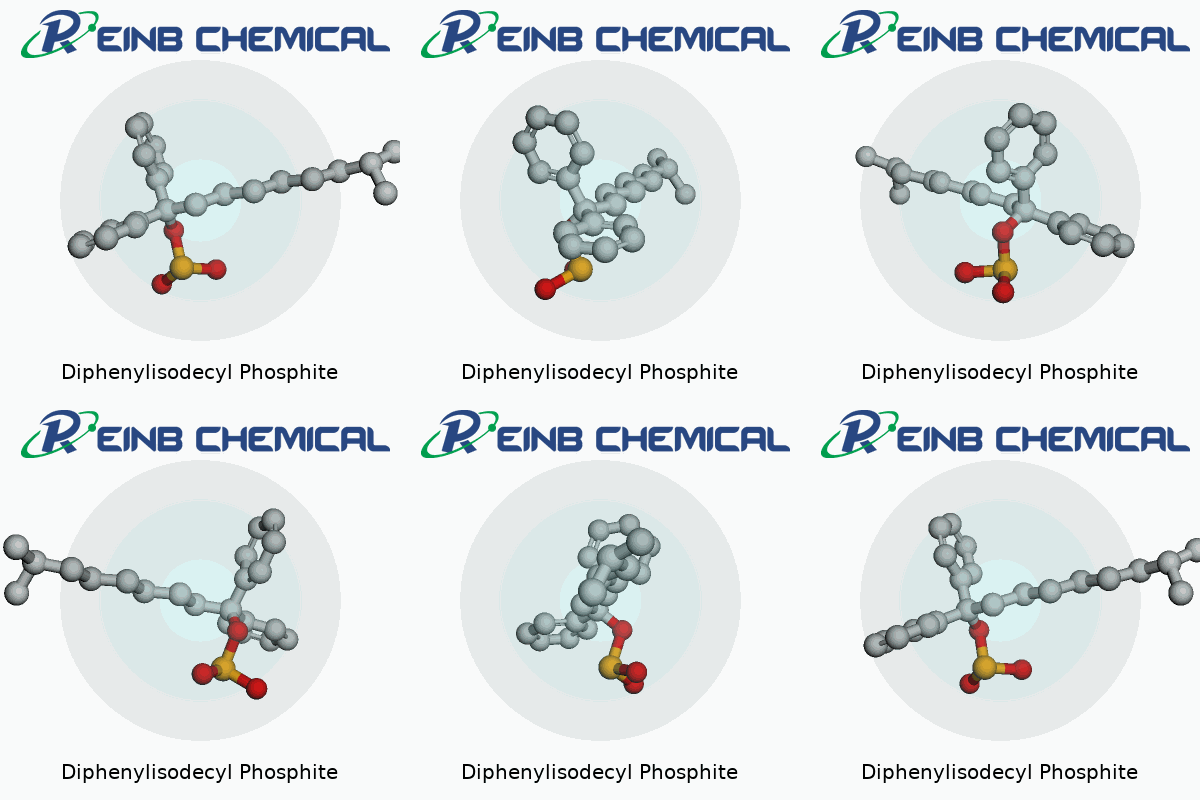
| Names | |
| Preferred IUPAC name | Triphenyl dec-9-yl phosphite |
| Other names |
Isononyl diphenyl phosphite Phosphorous acid, isodecyl triphenyl ester Phosphorous acid, isodecyltriphenyl ester Isononylphenyl phosphite |
| Pronunciation | /daɪˌfiːnɪlˌaɪsoʊˈdɛsɪl ˈfɒsfaɪt/ |
| Identifiers | |
| CAS Number | 25550-98-5 |
| 3D model (JSmol) | `3DModel:JSmol("CC(CCCCCCC1=CC=CC=C1)OP(=O)(OC2=CC=CC=C2)OC")` |
| Beilstein Reference | 2308733 |
| ChEBI | CHEBI:85054 |
| ChEMBL | CHEMBL514544 |
| ChemSpider | 21788041 |
| DrugBank | DB11382 |
| ECHA InfoCard | 03b47b4b-2f89-4a08-a867-9b198127b8e3 |
| EC Number | 248-742-6 |
| Gmelin Reference | 78663 |
| KEGG | C22102 |
| MeSH | D004184 |
| PubChem CID | 102849 |
| RTECS number | TH7700000 |
| UNII | 5I2L7F0U8M |
| UN number | UN3082 |
| Properties | |
| Chemical formula | C28H45O3P |
| Molar mass | 492.65 g/mol |
| Appearance | Colorless or pale yellow transparent liquid |
| Odor | Odorless |
| Density | 0.97 g/cm3 |
| Solubility in water | insoluble |
| log P | 10.6 |
| Vapor pressure | <1 mm Hg (20°C) |
| Acidity (pKa) | 14.0 (estimated) |
| Basicity (pKb) | 10.8 |
| Magnetic susceptibility (χ) | -90.0e-6 cm³/mol |
| Refractive index (nD) | 1.516 |
| Viscosity | 400.0 mPa.s (25°C) |
| Dipole moment | 3.28 D |
| Thermochemistry | |
| Std molar entropy (S⦵298) | 395.3 J·mol⁻¹·K⁻¹ |
| Std enthalpy of combustion (ΔcH⦵298) | -11580.4 kJ/mol |
| Hazards | |
| GHS labelling | GHS07, GHS09 |
| Pictograms | GHS07,GHS09 |
| Signal word | Warning |
| Hazard statements | H315: Causes skin irritation. H319: Causes serious eye irritation. H411: Toxic to aquatic life with long lasting effects. |
| Precautionary statements | P210, P273, P280, P305+P351+P338, P370+P378, P501 |
| NFPA 704 (fire diamond) | 1-2-1-½ |
| Flash point | 220°C |
| Autoignition temperature | 370°C |
| Lethal dose or concentration | LD50 (oral, rat): > 25,000 mg/kg |
| LD50 (median dose) | LD50 (median dose): Oral, rat: 8200 mg/kg |
| NIOSH | NA |
| PEL (Permissible) | Not established |
| REL (Recommended) | 0.1 mg/m3 |
| Related compounds | |
| Related compounds |
Triphenyl phosphite Tris(nonylphenyl) phosphite Tris(2,4-di-tert-butylphenyl) phosphite Tris(2-ethylhexyl) phosphite Triisodecyl phosphite |




