

Lead Isooctanoate entered the chemical landscape as engineers and industrial chemists searched for additives to improve the stability and durability of polymers and paints. Early in the 20th century, researchers experimenting with metal carboxylates, such as lead naphthenate and lead stearate, noticed that blending lead with synthetic fatty acids produced unique compounds with promising results. Isooctanoic acid, branched and relatively accessible from petrochemicals, offered a fresh route to new organolead salts in the mid-century. Laboratories gravitated toward isooctanoate compounds because they produced high-performing stabilizers for PVC and flexible coatings. Reliable records show that as regulatory scrutiny grew around the use of lead, each industrial advance faced tough questions—balancing technical need against emerging health findings.
Lead Isooctanoate falls under the category of metallic soaps—salts produced by reacting metallic precursors like lead oxide or lead acetate with organic acids. The product’s main draw stems from its ability to bind with PVC chains, protecting the material from heat-induced degradation during processing. Chemical manufacturers typically sell it in liquid or paste form, adjusted for easy mixing into base formulations. Reports from the past ten years point to its use in specialty pigment dispersions, heat stabilizer blends, and as a drying agent for industrial paints and varnishes. As the world gradually phases out many lead-based chemicals, the remaining demand for Lead Isooctanoate tends to concentrate in regions that lag in regulatory restrictions.
At room temperature, Lead Isooctanoate shows as a pale, oily liquid with a density above water and a noticeable, solvent-like odor. It dissolves easily in chlorinated and aromatic hydrocarbons, but poorly in alcohol or water. Structurally, it contains lead cations connected to two branched isooctanoate anions, which grants it oil solubility and compatibility with nonpolar resins. Decomposition starts at moderate temperatures, producing irritant fumes and deposits of lead oxides. The chemical stands out for its thermal stability and capacity to neutralize hydrogen chloride generated during plastic decomposition, all of which play a part in why compounds like this became popular in plastics processing. Boiling begins above 250°C, and its vapor pressure remains low under standard conditions, reducing volatility in open systems but not the risk from hand-to-mouth exposure or inhalation of fine droplets during manufacture.
Industrial suppliers classify Lead Isooctanoate with specifications covering content of elemental lead (often between 24–30%), acid value, and moisture content. Labels carry hazard statements required for lead compounds: warnings about reproductive toxicity, long-term environmental risk, and the need for gloves and respiratory protection. Product drums or pails carry United Nations transport numbers and pictograms for acute toxicity. Material Safety Data Sheets (MSDS) go further, detailing exposure limits, storage temperatures, and recommended actions for spills or mishaps. From my time consulting with a coatings company, intensive quality control ensures impurities don’t build up above trace levels since catalysts—or contaminants—can trigger failures in finished products. With regulatory agencies setting thresholds on allowable lead content in finished goods, consistent labeling and robust documentation matter for both producers and end-users.
Production of Lead Isooctanoate usually starts by reacting lead(II) oxide or lead(II) acetate with isooctanoic acid under heat, often with a small amount of water to encourage reaction efficiency. Chemists stir the mixture vigorously until all solids dissolve and a clear solution appears. The process continues with carefully controlled temperature, typically inside a reactor with nitrogen purge to avoid oxidation. Once the reaction completes, excess acid or water gets stripped off under vacuum, leaving the concentrated finished product. Over the past twenty years, process engineers optimized the method for reduced batch times and waste minimization, improving yield and tighter control with less energy. Wastewater and vapors require scrubbing to capture airborne lead, which environmental managers monitor closely due to risks of ground or air contamination. Routine lab tests ensure each batch stays within tight boundaries for lead concentration and acid residue. On-site operators rely on real-time sensors to catch deviations early, because safety and product quality hinge on discipline at this step.
Lead Isooctanoate reacts mostly as a salt, somewhat inert under normal storage, but in real production it undergoes hydrolysis, oxidation, and ligand exchange. Exposure to acids or moisture over time breaks down the compound, converting it to free lead oxide and isooctanoic acid. Strong oxidizers can promote further decomposition, forming lead dioxide and choking fumes—one reason maintenance protocols never allow acid tanks next to storage vessels. In research settings, chemists sometimes modify the isooctanoate chain with various substituents, tuning its solubility and reactivity for niche polymer blends. Lead carboxylates, as a group, have been studied for their catalytic properties too, given the Lewis acidity of the central metal, though practical application stays limited due to lead’s toxicity. Processing at high temperature unlocks further reactions, as PVC or resin chains may bond or break in the presence of organolead catalysts, shifting both product stability and environmental risk if controls slip.
Over the years, companies and catalogs have called this compound by names like Lead(II) isooctanoate, Octanoic acid, 2-ethylhexanoic acid, lead salt, and simply “Lead 2-EH”. In older texts and manufacturer data sheets, “lead octoate” shows up quite often, referring to its association with octanoate or isooctanoate ligands. Some industrial listings use codes reflecting the lead concentration or solution strength (e.g., “Lead Isooctanoate 28%” or “LOCT28”), which buyers use to compare performance and price.
Handling Lead Isooctanoate takes real caution due to the risk of inhalation, ingestion, and prolonged skin exposure. Workplace exposure limits in the European Union and the US remain strict, requiring efficient ventilation, closed processing loops, and personal protective equipment. I’ve seen operations that rely on dedicated pipelines and automated dispensing to keep workers from direct contact. Everyone who handles the product goes through training on the hazards, spill response, and waste disposal, since even low, repeat exposures build up hazardous blood lead levels. Storage follows rigorous inventory control in separate chemical storage rooms, with signage and restricted access. Any sign of leakage or drum damage triggers swift containment and notification procedures. Annual reviews of safe handling practices occur, incorporating both regulatory updates and feedback from observed incidents on the shop floor. From an operations side, plant managers invest in real-time monitoring for airborne lead, using specialist contractors to routinely test surfaces and worker health.
Historically, PVC manufacturing made up most of the demand for Lead Isooctanoate, where it acts as a heat stabilizer—protecting polymers during extrusion, molding, and long service life in building products or cable insulation. Most flexible and semi-rigid PVC for decades carried a blend of lead carboxylates. The compound also found uses in oil paint and varnish formulations as a drying agent, which shortens cure time and hardens the final film. In some regions, anti-corrosion coatings and certain rubber goods contained lead isooctanoate to benefit from its chemical resistance. With growing regulation and substitution, much of this use has shifted toward alternatives like barium, calcium, or tin stabilizers. Still, legacy demand persists in regions or product lines exempt from stricter restrictions. This reflects both the challenge and the inertia in changing large-scale industrial chemistry, where performance and price compete with safety and legal compliance. In my experience, transitioning away from lead-containing stabilizers takes not just technical innovation but extensive retraining, new partnerships with raw material suppliers, and full validation of substitute recipes.
Innovation around Lead Isooctanoate focuses less on new uses and more on safer handling, detection, substitution, and cleanup. Labs in academic and government settings continue to study the mechanism by which lead stabilizers work in polymers, seeking routes to mimic those effects with less toxic metals. Researchers have also developed sensitive analytical methods to trace lead residues down to parts per billion in polymer products, essential for safety checks. Novel chelating agents, improved extraction solvents, and even microbial remediation strategies gain attention to strip or lock down lead in old plastics and soils. On the process side, engineers experiment with continuous reaction systems, greener solvents, and tighter source reduction. Over the past decade, progress in alternate metal carboxylates—calcium/zinc, organic tin, or mixed-metal complexes—reflects a shift toward safer materials, but a mix of technical and economic hurdles slows broad conversion. Professional conferences often host panels wrestling with the need to balance legacy infrastructure with demands for cleaner chemistry.
Human health research on lead carboxylates like Lead Isooctanoate tells a consistent story: exposure, even at low levels, leads to bioaccumulation, neurological damage, reproductive harm, and a suite of chronic illnesses. Animal studies confirm similar outcomes. Regulatory scientists scrutinize every use of lead compounds in production or consumer goods, recognizing the pathways from industrial waste to water, air, soil, and living organisms. Significant research now tracks sources of exposure not only in workplaces but in communities surrounding old factories, landfills, or facilities that processed lead-based paints and plastics decades ago. Blood lead monitoring data in exposed populations remains a stark indicator; no safe level exists, especially for children. International agencies like the WHO, EPA, and REACH provide ever-stricter guidance, and some governments fund replacement technologies. Toxicologists continue to probe subtle effects at trace exposures, as new analytical tools bring greater precision. From direct experience in community health, supporting tighter controls on legacy lead waste and worker protections has paid off in reduced health burdens.
Lead Isooctanoate faces an uncertain future as most markets transition to safer alternatives. Regulatory timelines keep tightening, and industrial users face increasing liabilities as societies press for cleaner technologies and products free from high-risk metals. Investment now flows into R&D on functional replacements, improved process controls, and technologies that safely decommission or recycle old lead-stabilized materials. Companies with large installed bases of lead-stabilized products must plan for responsible end-of-life management—developing cost-effective routes to isolate, recover, or detoxify the metal before disposal or recycling. The commercial push combines stricter procurement policies, green chemistry design, and a new transparency with clients who ask hard questions down the supply chain. Cleaner, safer, more sustainable additives stand out as both practical advances and moral imperatives, and chemists, engineers, and workers alike watch closely to see how industries adapt and rebuild practices in the years ahead.
Lead isooctanoate shows up as a heavy metal compound mixed with organic acids, mainly isooctanoic acid. In the real world, industry uses it in small but important ways. I’ve come across its name often in paint and coatings circles, mostly as a curing agent for certain types of paints and varnishes. Painters and manufacturers want paint that dries strong, durable, and quick. A curing agent can help make that happen. Lead compounds, like lead isooctanoate, push the drying process. They kick off chemical changes that shift a sticky paint or resin into a solid film.
This compound also finds a home in the production of PVC plastics as a heat stabilizer. Producing PVC pipes or window frames involves high heat, and plastic can break down unless something holds it together. Lead isooctanoate, blended into the mix, keeps the material stable. The right stabilizer makes the difference between a product that cracks in sunlight and one that lasts for years.
Lead has a long history in paints, fuel additives, and other chemicals—usually to improve product performance. Growing up, I remember my parents warning me not to chew on windowsills because of lead paint. Over the years, health experts have discovered that even tiny amounts of lead can cause major damage, especially in kids. Researchers at the Centers for Disease Control and Prevention link lead exposure to developmental problems, lower IQ, and learning difficulties.
Today, regulations around the world sharply limit the use of lead in consumer products for these reasons. The Environmental Protection Agency (EPA) keeps a close eye on compounds like lead isooctanoate. In the workplace, OSHA requires strict controls to keep dust and fumes out of workers’ lungs. Waste from plants using lead stabilizers must be handled like hazardous material. Lead seeps into soil and water, and unlike some chemicals, it stays around—hard to remove once present.
Many companies across North America and Europe phase out lead-based stabilizers, especially for items like toys, food packaging, or drinking water pipes. For example, calcium and zinc-based compounds have started to take over as stabilizers in PVC production. These replacements come without the same health baggage. They hold up during high-heat manufacturing and they do not contaminate water or food.
Paint manufacturers also look at manganese or cobalt-based driers for coatings. Decades ago, lead compounds were standard in paints meant for ships or industrial gear, because they worked so well. Now, the law and public demand force the switch to safer products. The effort takes research, investment, and time, but it pays off with cleaner air and safer workplaces.
Manufacturers choosing materials for new products juggle performance, price, and safety. The evidence stacks up against keeping old lead-based chemicals just to save on cost or stick with tradition. Lead isooctanoate works well in some chemical processes, but risks outweigh the advantages—especially in items that might touch food, children, or drinking water. Switching to safer options costs money upfront, but the long-term health and environmental returns justify it.
Experience shows that industry moves fastest when rules are clear and consumers pay attention. Bans and limits on lead chemicals protect people who don’t get a choice about their exposure. As a writer and a parent, I want a world where nobody has to worry about invisible poisons in paint, plastic, or street dust.
Lead compounds don’t just belong in history books. Lead Isooctanoate sees real use in research labs and various manufacturing sectors. But every time hands reach out for this chemical, invisible dangers come along for the ride. Breathing it in can mess with the nervous system, kidneys, and even the blood. Getting it on the skin or in the eyes won’t do any favors, either. It’s been linked to cancer risks and causes reproductive harm. With stakes like these, brushing off safety pretty much invites trouble.
Working with toxic materials taught me a few things early on: accident-free days don’t come by chance. For a start, I rely on personal protective equipment. Gloves made of nitrile keep accidental splashes from contacting skin. My lab coat stays buttoned all the way, and goggles shield my eyes against any airborne droplets or powder. Every worker in the area follows this playbook, because cutting corners delivers nasty surprises.
Ventilation plays a big role. Fume hoods aren’t decorative; they act as the main defense against inhaling dangerous vapors. Each time a container gets opened, it happens under a running hood. This keeps contaminated air away from lungs, and I’ve learned not to trust an area that smells off or sends up a dust cloud. Nobody in my lab takes shortcuts with air quality — and neither should anyone else handling a substance like this.
Lead Isooctanoate can’t sit just anywhere. A sealed, clearly labeled container marks the start of every shift. Keeping it locked up where only trained staff can reach it helps prevent accidental exposure. Labels show hazard symbols and emergency contacts, because information saves time when quick action matters. Many places use spill-proof containers to guard against leaks or accidents, and I always double-check that seals aren’t broken. If a mess does happen, every spill kit sits ready nearby — no improvising allowed.
Nobody wants hazardous waste left hanging around. After each session with this chemical, surfaces get wiped down with materials that trap and hold toxic residues. Rags and gloves go in special hazardous waste bins, not the trash can. Waste companies trained in handling lead-based materials come to collect full containers. Local rules demand that nothing ends up in regular landfill sites. People who skip proper disposal might find themselves facing heavy fines — or much worse if contamination spreads or someone falls ill.
At the end of the day, the most important tool is education. Workers who know what symptoms to watch for stand a better chance of catching problems before they become crises. We hold regular safety meetings, making sure everyone knows where the spill kits sit and how to use them. Posters with warning signs cover our lab walls. Skilled supervisors make sure that newcomers get hands-on training before they step near hazardous chemicals. I’ve seen experienced hands spot trouble from twenty feet away because they pay attention to routine and trust in experience. Keeping up with safety training saves lives, period.
Better substitutes exist for some applications, and switching can cut down risks overnight. Proper investment in lab ventilation, regular health checkups for staff, and tighter legal controls can keep workplaces safer. Labs that focus on culture and continuous improvement avoid “just get it done” shortcuts. People talk openly about mistakes, fix weaknesses, and improve systems year over year. That’s the approach that keeps everyone above ground, headache-free, and out of the hospital.
Lead compounds still surface in conversations about specialized chemicals. Lead Isooctanoate, known as lead 2-ethylhexanoate, often gets used where strong, heat-resistant stabilizers matter. Lead as a base element doesn’t appear in isolation. Instead, chemists bond it with organic acids, like 2-ethylhexanoic acid, to make this compound. The right mix offers durability in harsh environments, especially in older coatings and polyvinyl chloride (PVC) processes.
Chemists typically form Lead Isooctanoate by reacting lead oxide with 2-ethylhexanoic acid. Every formula tells a story about building blocks and structure. Lead has a common oxidation state of +2, so Lead(II) isooctanoate’s formula looks like this: Pb(C8H15O2)2. Each 2-ethylhexanoate ion, which is C8H15O2-, pairs up with the lead. Its CAS number is 301-08-6, used in chemical inventories and regulatory databases worldwide.
People mixing chemicals work in grams and moles, not just letters and numbers. Practically, they handle a dense, viscous liquid. Reactions happen in glass flasks under hoods, and safety checks remain constant.
Reading Pb(C8H15O2)2 means more than passing a chemistry quiz. Mislabel the formula or overlook a subscript—people or processes get exposed to the wrong compounds. I remember training with a senior chemist who could spot an error before ink hit paper. That attention to detail came from understanding—not just repeating—the logic behind formulas.
Lead in these compounds gives tough performance, especially needed for certain weather-resistant coatings and heat-stabilized plastics. Applications in legacy infrastructure sometimes still demand it, even as safer alternatives gather pace.
Lead compounds like isooctanoate don’t leave much room for “better luck next time.” The dangers hit hardest in small doses—especially for children, staff in manufacturing, or workers during maintenance or disposal.
Over the years, more regions have tightened restrictions on lead content. The US Environmental Protection Agency (EPA), European Chemicals Agency (ECHA), and similar bodies track and limit lead-based products. Import/export records, workplace air monitoring, and waste management guidelines all connect back to molecule-level details written in the formula.
Alternatives continue to grow. Calcium-zinc and organic-based stabilizers now handle jobs once made routine for lead isooctanoate. Change still stirs debate. Equipment from the 1970s can’t update as quickly as textbooks. Yet, pushing for replacements and enforcing clear labeling helps defend health and ecosystems.
Accurately naming and understanding compounds like Lead Isooctanoate helps labs keep risks in check and supports those who must handle such chemicals. Every drop of discipline poured into labeling, record-keeping, and substitution can spare someone a lifetime of health regrets. Simple care with formulas supports workplaces and the wider world, one check at a time.
Lead isooctanoate does a job in certain industrial applications, especially in making coatings and PVC stabilizers. Anyone working with it knows it brings significant risks. This chemical contains lead, a metal with a reputation for causing long-term harm to people and the environment. Stories of communities dealing with lead contamination drive home the point—letting this stuff leak or scatter causes trouble for both health and reputation. The key lesson: storage choices matter, because the smallest mistake can turn into a major challenge later.
For someone managing storage, location comes first. A dedicated, ventilated room on a site works better than tucking barrels in the corner of a multipurpose warehouse. Strong airflow keeps vapors from building up, lowering the risk of inhalation or fires. The space stays cool, dry, and well away from sun, heat sources, or machinery that might throw a spark. Some chemicals live harmlessly in the open—but not this one. Direct sunlight and heat break it down, increasing pressure inside containers and risking leaks.
Container material plays a big role. I’ve seen workers pile cans and drums on top of each other, trusting old seals and dented metal. Flimsy or corroded containers spill, and cleaning that mess costs time and money. Thick-walled, chemically resistant drums (usually steel, lined with an acid-resistant coating) last longer and hold up better if dropped. Each drum carries a clear label—no marker scrawls or faded stickers. Missing a hazard sign might mean someone moves the drum without gloves or drops it somewhere it shouldn’t be.
Lead isooctanoate reacts with strong acids and oxidizing chemicals. Never store near sulfuric acid, nitric acid, or bleach-based products. Chemicals that react with lead can spark fires or release toxic gases. Segregate this compound in its own storage bay, complete with spill trays or bunds to catch leaks. If a drum leaks, quick response limits spread and protects everyone nearby. I’ve seen companies lose contracts after a simple spill hinted at sloppy safety standards. People watch how you treat hazardous materials.
Storage principles only work if the team actually follows them. Workers at every level—from janitorial staff to the warehouse manager—need clear instructions on handling and first aid. Proper gloves, goggles, and work aprons sit ready nearby. Clearly marked wash stations hang on the wall, not hidden behind cardboard. Training isn’t a one-time job. Regular drills and refreshers remind everyone of the risks and emergency steps. Even old hands sometimes forget details in a busy season.
Routine checks spot bulging drums, rust, or signs of leaks. Simple checklists (not fancy digital systems most can’t use in gloves) help keep attention on the basic steps. I learned early that inspections should happen weekly, not once a month. Problems left for thirty days have a habit of growing out of control.
Waste disposal demands special attention. Pouring leftovers down a drain or ignoring expired materials violates both ethics and law. Most countries demand special permits and services to collect anything with lead. Proper logs show that nothing shady happened—a company’s paperwork protects them if regulators start asking questions. Mishandled waste damages waterways, wildlife, and company reputation. Fines can run into the six figures, and in some places managers face jail time. That risk outweighs the costs of good storage practice.
Storing lead isooctanoate safely means respecting both the chemical’s hazards and everyone who might come in contact with it. Doing things right brings peace of mind—not just for managers, but for neighbors as well.
Lead is a name no one wants to see on a chemical label at work. In the past, lead sneaked into paints, pipes, and gasoline—causing years of lawsuits and clean-up. Now, chemists see new forms show up in specialty compounds. Lead isooctanoate falls into this category. It gets sold to companies trying to boost performance in coatings or as a stabilizer, but the harsh lesson from past mistakes sticks around: lead does not just disappear. When dealing with lead-based chemicals, I’ve witnessed how easily “trace amounts” turn up in unexpected places, from soil samples near industrial sites to sediment in creeks.
Some might say this compound offers technical benefits in certain processes. The real problem lies in its ability to break down. Lead compounds end up lingering in the environment, sticking to particles and spreading through water or air. Once released, lead accumulates. No plant or animal evolved to handle it, so biological systems—especially young brains—take the damage. Even a small leak from a production line can spell trouble for farmland, backyard gardens, or water wells that people rely on every day. I recall neighbors worrying about vegetable patches near an old factory site, wondering if decades-old decisions still tainted the food they grew. With lead compounds like isooctanoate, the question comes back: do we know where every drop lands?
Kids pay the highest price for environmental lead. Decades of research show it harms learning and development at levels far below what used to be considered “safe.” At work, I’ve watched health officials dig soil pits beside playgrounds, looking for the cause behind slow growth and scattered concentration issues among children. Each time a new lead-based compound hits the market, communities hope lessons have sunk in from older disasters. Medical studies, including those from the CDC and WHO, point out one fact: once lead gets into food, water, or even dust, getting rid of it proves much tougher than anyone wants to admit. Keeping compounds like lead isooctanoate tightly controlled isn’t about regulation for its own sake—it’s basic damage prevention.
Some companies say “alternatives don’t work as well.” Often, that comes down to budget or convenience, not true impossibility. Safer stabilizers or additives show up in academic journals and patent filings every year. More businesses could invest in swapping out older, riskier formulas for new ones that don’t end up on public health watch lists. Public reporting rules nudge companies toward transparency, but public attitudes matter, too. Once people in a neighborhood connect pollution to developmental delays or learning disabilities, they push local monitors and politicians into action. Evidence grows louder than industry literature—visible spills, childhood diagnosis rates, or lead levels in runoff turn heads quicker than a safety data sheet.
Having seen firsthand the fallout from chemical contamination, I see the value in asking tough questions before trouble starts. Engineers can design safer plants. City councils can demand proof that new chemicals really outperform old standbys, not just on paper, but in street-level safety. Professional societies and policymakers can set higher standards, keeping future generations out of the shadow cast by widespread lead exposure. The story of leaded chemicals belongs in training manuals and policy meetings—not backyard gardens or elementary schools.
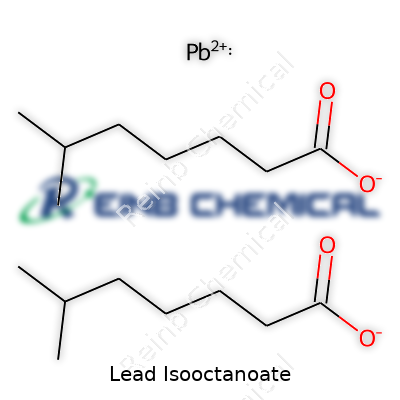
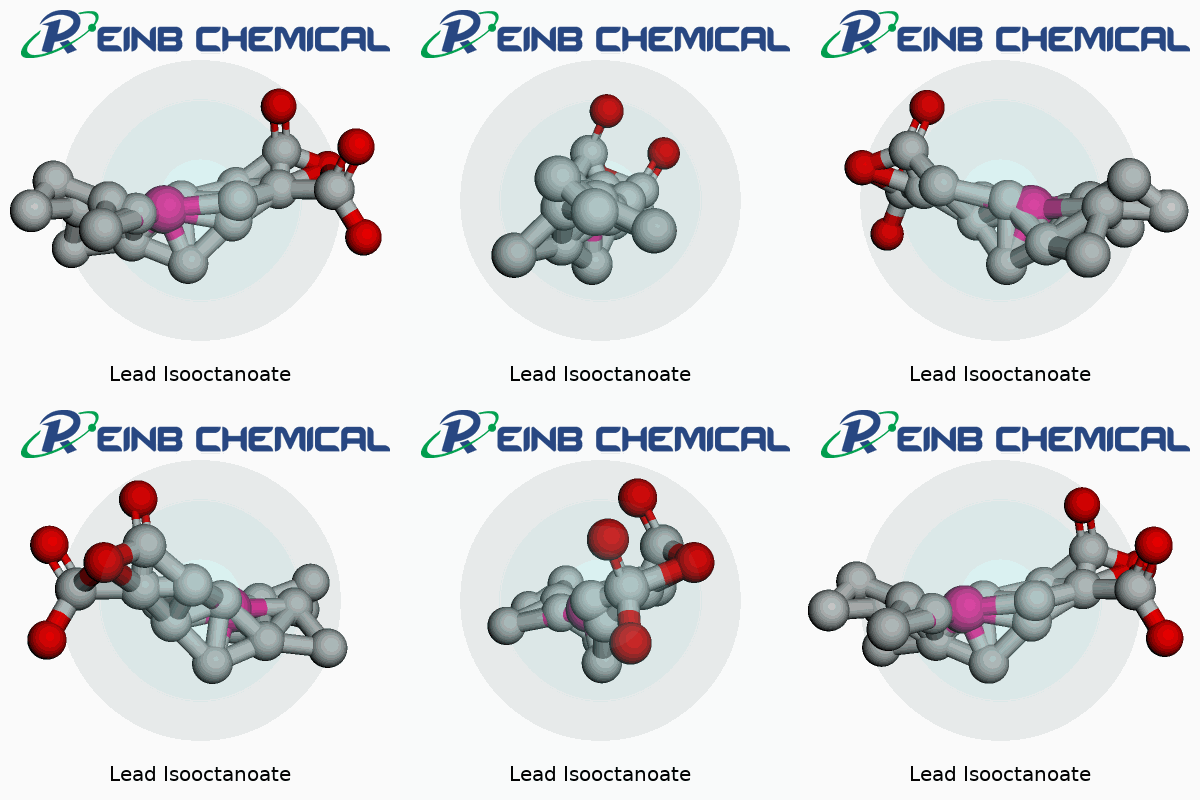
| Names | |
| Preferred IUPAC name | 2-Ethylhexanoic acid lead(2+) salt |
| Other names |
Lead 2-ethylhexanoate Bis(2-ethylhexanoic acid)lead(II) Lead(II) 2-ethylhexanoate Lead octoate |
| Pronunciation | /ˈliːd aɪˌsoʊˈɑːktəˌneɪt/ |
| Identifiers | |
| CAS Number | ‘67874-67-1’ |
| Beilstein Reference | 3022486 |
| ChEBI | CHEBI:81959 |
| ChEMBL | CHEMBL3185012 |
| ChemSpider | 14197009 |
| DrugBank | DB11147 |
| ECHA InfoCard | 03e7e869-e1aa-4296-aaa4-aa6b00b7a3f5 |
| EC Number | 272-045-7 |
| Gmelin Reference | Gmelin Reference: 202142 |
| KEGG | C18283 |
| MeSH | D002317 |
| PubChem CID | 3036782 |
| RTECS number | OV8575000 |
| UNII | 7P6U57G01E |
| UN number | UN3077 |
| Properties | |
| Chemical formula | Pb(C8H15O2)2 |
| Molar mass | 570.98 g/mol |
| Appearance | Colorless to pale yellow transparent liquid |
| Odor | Slight characteristic odor |
| Density | 1.78 g/cm3 |
| Solubility in water | insoluble |
| log P | 11.2 |
| Vapor pressure | Negligible |
| Acidity (pKa) | 7.2 |
| Basicity (pKb) | 11.05 |
| Magnetic susceptibility (χ) | Diamagnetic |
| Refractive index (nD) | 1.5000 |
| Viscosity | 66.6 mm²/s (40°C) |
| Dipole moment | 2.45 D |
| Thermochemistry | |
| Std enthalpy of formation (ΔfH⦵298) | -390.6 kJ/mol |
| Pharmacology | |
| ATC code | There is no ATC code assigned to Lead Isooctanoate. |
| Hazards | |
| Main hazards | May cause damage to organs through prolonged or repeated exposure. Toxic if swallowed. Suspected of causing cancer. Causes damage to organs. Toxic to aquatic life with long lasting effects. |
| GHS labelling | GHS02, GHS07, GHS08 |
| Pictograms | GHS06,GHS08 |
| Signal word | Warning |
| Hazard statements | H373: May cause damage to organs through prolonged or repeated exposure. |
| Precautionary statements | P201, P202, P260, P264, P270, P272, P280, P302+P352, P308+P313, P314, P321, P362+P364, P405, P501 |
| Flash point | > 139°C (282°F) |
| Lethal dose or concentration | LD50 (oral, rat): 5,000 mg/kg |
| LD50 (median dose) | LD50 (median dose): Oral-rat LD50: 6500 mg/kg |
| NIOSH | NA1264 |
| PEL (Permissible) | 0.05 mg/m³ |
| REL (Recommended) | 50 mg/m³ |
| IDLH (Immediate danger) | IDLH: Not Established |
| Related compounds | |
| Related compounds |
Lead(II) acetate Lead(II) oxide Lead naphthenate Lead stearate Lead octoate Lead resinate |




